The Nanotechnology Laboratory supports advanced research and instructional activities in the synthesis, characterization, and application of nanoscale materials and functional nanostructures. The laboratory focuses on nanomaterial fabrication, surface and interface engineering, polymeric and inorganic nanocomposites, and the study of size‑dependent physical, chemical, and mechanical properties. It enables the development of nanoscale systems for energy, environmental, biomedical, and smart‑material applications, and the following equipment are available in this laboratory.
1. Vacuum oven
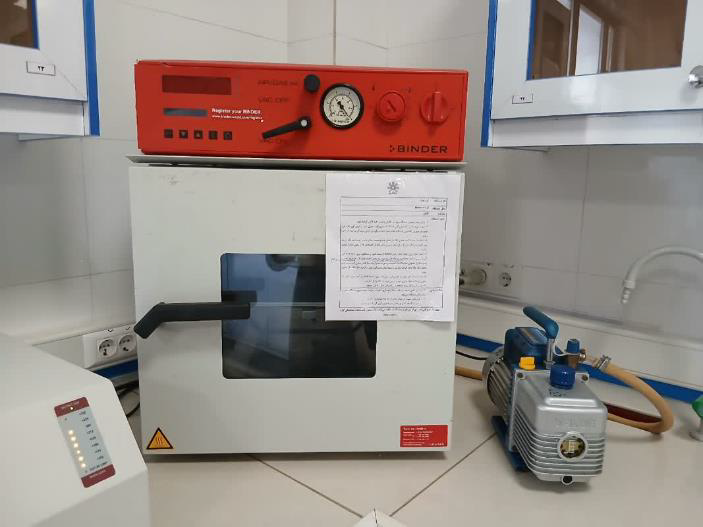
The Binder VD23 vacuum oven is an advanced device designed for gentle and precise drying of materials sensitive to heat and oxygen. This oven provides reliable and efficient performance through uniform temperature distribution, precise vacuum control, high drying speed, and optimized energy consumption. The Binder safety and control systems ensure stable and secure operation for the user. Drying under vacuum allows moisture and residual solvents to evaporate at lower temperatures and without exposure to oxygen, preventing thermal degradation and oxidation
of the sample. This process helps preserve the porous or crystalline structure of materials, resulting in a purer and more stable product, although some volatile compounds may be lost. Typically, after initial drying in a conventional oven, this device is used for complete moisture removal and extraction of residual compounds from the sample pores. The operational temperature range of the device extends up to 70 °C.
2. Light Microscope
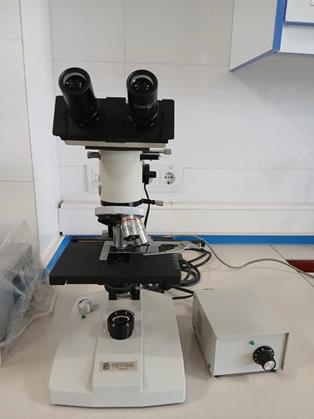
The light microscope in your laboratory is a compound optical microscope used for observing biological samples and materials at various magnifications. It is equipped with KHW 10X/20L eyepieces and three SPlanM objective lenses with magnifications of 4X, 10X, and 40X, providing a total magnification range of 40× to 400×. The SPlanM (Super Plan) objectives produce flat, high-quality images across the entire field of view with minimal distortion. Light from the built-in illumination system passes through the specimen and is focused by the lenses to form a clear, enlarged image. This type of microscope is ideal for examining cells, bacteria, thin tissue sections,
and other transparent samples, and is commonly used in educational and research laboratories for studying fine structures of living and non-living materials.
3. Dual Pump Electrospinning
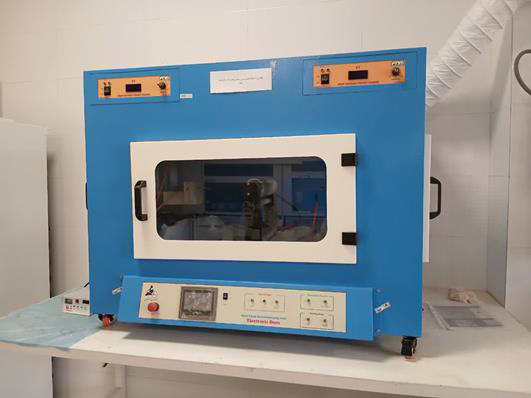
The Dual Pump Electrospinning Machine, manufactured by Fanavaran Nano-Megyas Company, is designed for the production of polymeric, carbon, and ceramic nanofibers with diameters ranging from 50 nanometers to several micrometers. This device consists of a metal body, syringe pumps, a spinning system, a collector system, and a high-voltage power supply. In this system, a syringe pump is positioned on each side of the drum collector. Overall, the device includes two syringe pumps, two scanning systems, two distance adjustment systems, and two high-voltage power supplies. With this setup, two different materials can be electrospun simultaneously. Moreover, by electrospinning a polymeric material on one side and additive materials such as drugs on the other, the system enables the fabrication of composite nanofibers containing the desired components. Therefore, this device is suitable for pharmaceutical, medical, and biological
applications. The system is equipped with a control panel featuring a touchscreen interface for adjusting electrospinning parameters.
4. Oven
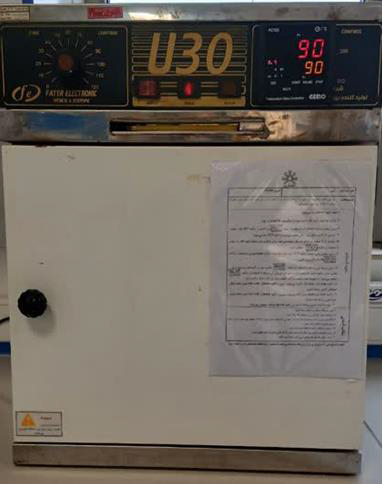
An oven is a device used for drying and synthesizing chemical materials. Its operating temperature typically ranges from 50°C to 170°C. The oven generates uniform heat within the chamber using heating elements and a temperature control system, ensuring consistent thermal conditions for experimental processes.
5. Ultrasonic
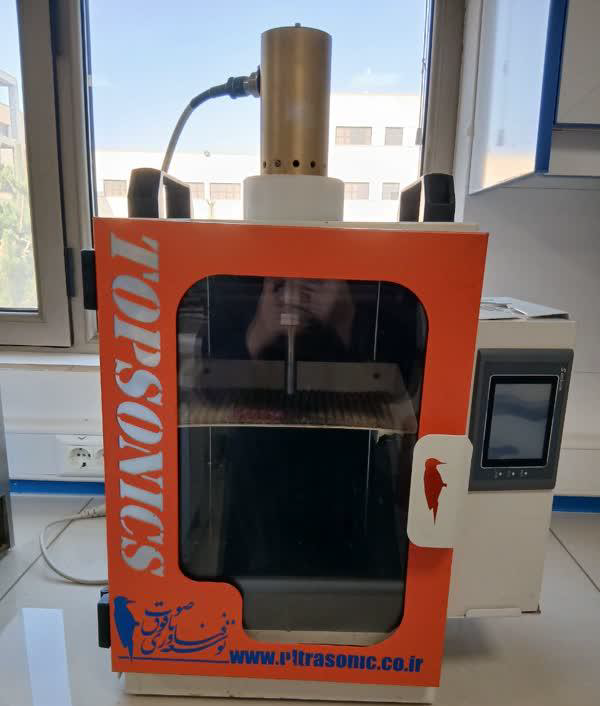 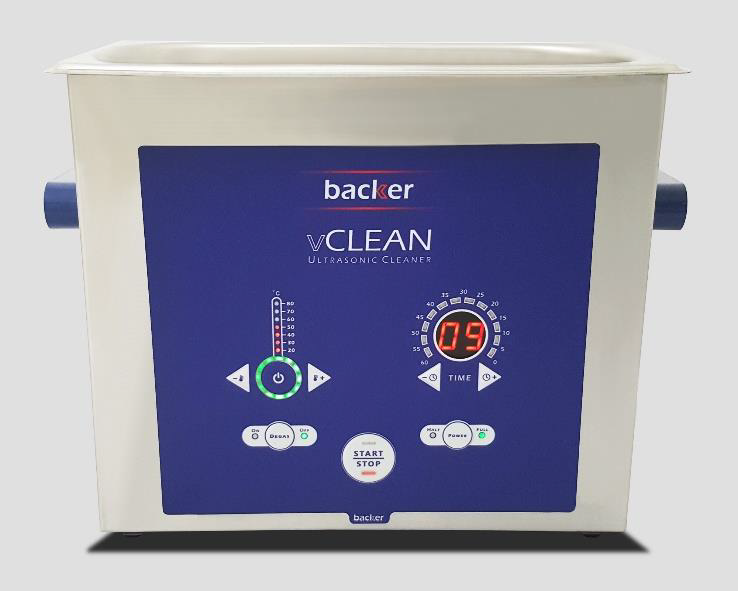
The Becker ultrasonic bath, model vCLEAN1-L20, with a power output of 400 W and a capacity of 20 liters, is an ideal device for cleaning, degassing, and sample preparation in laboratory and industrial environments. It is particularly suitable for cleaning laboratory glassware, delicate metal parts, precision tools, and removing surface contaminants from sensitive samples. With its operating frequency of 40 kHz, this ultrasonic bath can effectively remove contaminants, grease, fine particles, and insoluble residues from surfaces without causing damage to the samples. In
addition, it can be used in research applications for degassing solutions, homogenizing suspensions, and assisting in chemical or biological sample preparation processes.
The probe-type ultrasonic device manufactured by Topsonics, with a high power output of 400 W and an operating frequency of 20 kHz, is an advanced instrument designed for homogenization, dispersion, emulsification, and cell disruption processes. Utilizing intense mechanical vibrations generated by acoustic cavitation, the system efficiently and uniformly homogenizes both biological and chemical samples. With its adjustable power and time control, the Topsonics ultrasonic processor is ideally suited for particle size reduction, and the production of nanoemulsions and nanosuspensions, making it a reliable and versatile tool for a wide range of research and laboratory applications.
6. pH meter
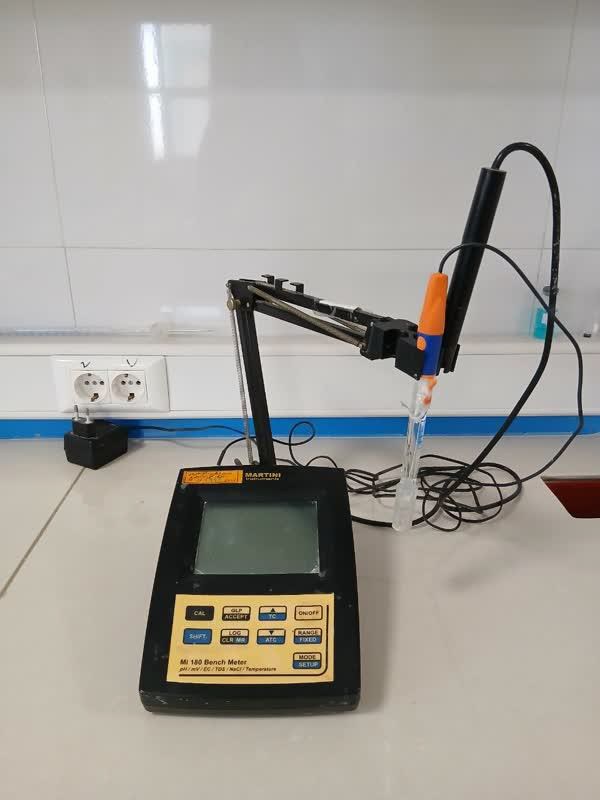
The Milwaukee MI180 pH meter is manufactured in the United States. This device is calibrated using three buffer solutions and is capable of measuring pH values in the range of 2 to 14. To extend the lifespan of the probe and prevent corrosion of the glass bulb, it is essential to take special care when measuring highly acidic (below pH 2.5) or alkaline solutions.
7. Jar Test
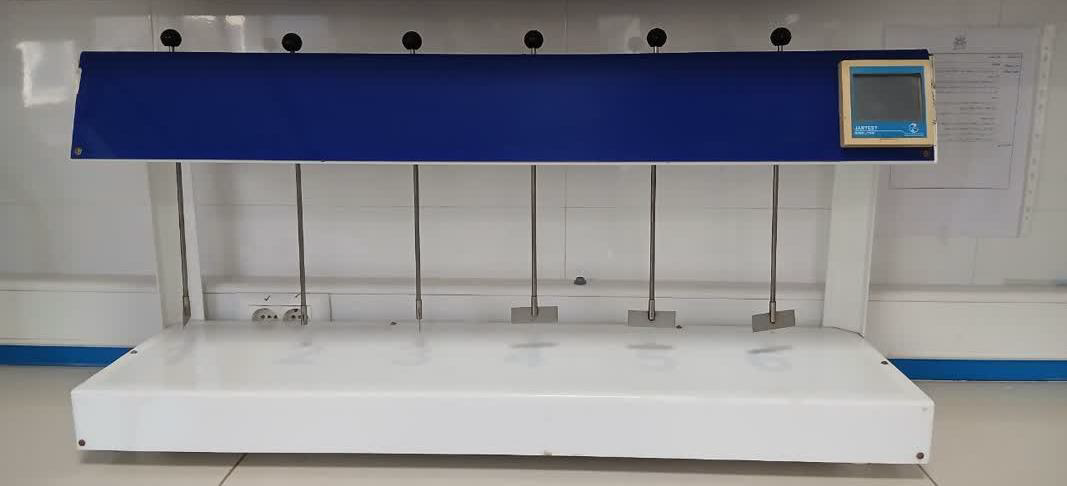
The 6-cell Jar Test is used for studying and optimizing coagulation and flocculation processes in water and wastewater treatment. In this test, water or wastewater samples are placed in several glass jars with varying amounts of coagulant chemicals, and then stirred to determine the optimal conditions for removing turbidity, suspended solids, and other pollutants.
The main applications of the Jar Test include:
- Determining the optimal coagulant dose for removing suspended solids and turbidity.
- Evaluating the effectiveness of flocculants and polyelectrolytes in water or wastewater treatment.
- Optimizing the mixing time and intensity for proper floc formation.
- Simulating treatment processes on a laboratory scale before full-scale industrial implementation, without altering the entire system
|