The Advanced Laboratory supports high‑level experimental research across specialized areas of civil engineering by providing facilities for detailed material characterization, structural and geotechnical analysis, and advanced measurement techniques. This laboratory enables both academic and industry‑oriented investigations that require precision instrumentation and specialized testing protocols, and the following equipment are available in this laboratory.
Direct Shear Apparatus
| Device Specifications |
Capacity |
Model & Year of Manufacture |
Manufacturer & Country |
Test Standard |
Device Status – Quantity |
| Direct Shear Apparatus (30×30 cm) |
5000 kg |
D6-1396 |
Arvin Test Equipment, Iran |
ASTM D3080 |
Operational – 1 |
| Direct Shear Apparatus (6×6 cm) |
500 kg |
– |
ELE – UK |
ASTM D3080 |
Operational – 1 |
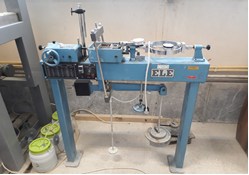
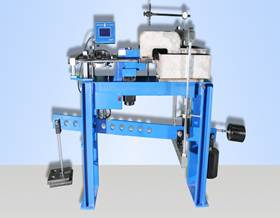
The direct shear test is one of the important experiments in geotechnical engineering (soil mechanics and foundation) conducted to determine the shear strength parameters of soil under consolidated drained (CD) conditions.
In this test, the soil is first consolidated under a certain vertical stress, and then, while maintaining the vertical stress constant, a shear stress with a controlled rate is applied to the soil specimen until failure occurs.
The maximum shear stress corresponding to a specific vertical stress represents a single point. The test is usually conducted with three different vertical stresses; thus, in the “shear stress–normal stress” coordinate system, three points are obtained. By drawing the best-fitting line through these points, the shear strength parameters of the soil (C, Φ) are determined.
Oedometer (Consolidation Apparatus)
| Device Name |
Capacity |
Model / Year |
Manufacturer / Country |
Standard |
Condition / Quantity |
| One-Dimensional Consolidation Apparatus |
12.8 kg/cm² |
MIS-232-1990 |
Marui – Japan |
ASTM D2435 |
Operational – 1 unit |
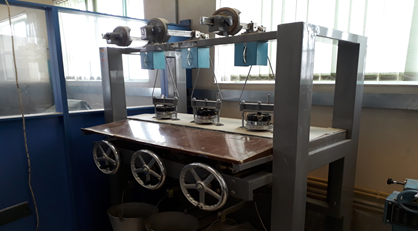
The consolidation test is used to determine the settlement behavior of soil under various stress levels and to calculate the related parameters.
In this experiment, a soil sample—placed inside a special ring and then positioned in the consolidation cell—is subjected to several stages of loading with different stress levels. At each stage, the amount of settlement of the soil sample is read and recorded over time.
At the end of the last loading stage and after the completion of settlement, the sample is gradually unloaded through several stages, and the amount of soil swelling due to unloading is also read and recorded at several stress levels. The test is usually conducted under fully saturated conditions.
In some types of consolidation tests, in order to model the actual field behavior of the soil, the sample is first loaded up to a certain stress under its natural moisture content; then, at that specific stress, the consolidation cell is filled with water, the sample becomes fully saturated, and the rest of the consolidation process is carried out under these conditions.
Concrete Compression Testing Machine – 200 & 300 ton Capacity
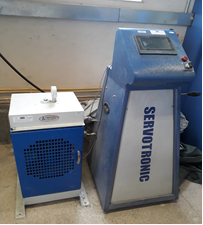
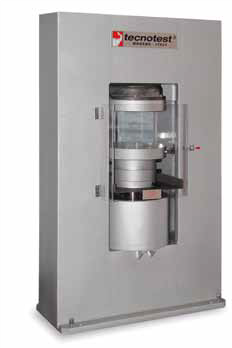
| Device Name |
Capacity |
Model / Year |
Manufacturer / Country |
Standard |
Condition / Quantity |
| Concrete Compression Testing Machine |
300 ton |
KC‑300, 2009 |
Tecnotest – Italy |
ASTM C39 |
Operational – 1 unit |
| Concrete Compression Testing Machine |
200 ton |
D312‑1393 |
Azmoon Saz Mabna – Iran |
ASTM C39 |
Operational – 1 unit |
Among the effective and widely used tests in the quality control of hardened concrete is the compressive strength test.
The term compressive strength of concrete refers to the result obtained from this test, which is performed on standard cubic or cylindrical specimens. This is the most common test used to assess the quality of concrete in terms of strength.
In this test, three cubic specimens with specified dimensions are prepared, which should finally be converted to equivalent cylindrical specimens. The test is carried out using a compression testing machine (press) that applies a uniform load to the specimen through two heavy steel platens. The operating principle of this apparatus is such that it increases the applied pressure until the specimen fails, recording the maximum load applied at failure.
To measure the compressive strength of concrete, specimens are cast and cured in the laboratory for a specified period. The compressive strength test, according to the ASTM standard, is conducted on cylindrical specimens of 300 × 150 mm (12 × 6 inches), while according to the BS standard, it is performed on 150 mm (6 inch) cubes. However, depending on the maximum aggregate size, the standards also allow the use of smaller or larger specimens.
The use of compression testing machines for determining the compressive strength of concrete specimens has become widespread. The Soil Mechanics Industries Co. of Iran has successfully designed and manufactured a fully automatic concrete compression testing machine. Among the most important features of this system are closed‑loop load‑rate control, the ability to perform automatic or manual testing, and the capability to conduct tests under either strain‑controlled or stress‑controlled modes.
Oven (Drying Chamber / Hot Air Oven)
| Device Name |
Capacity |
Model / Year |
Manufacturer / Country |
Standard |
Condition / Quantity |
| Fan-Assisted Oven |
240 L |
3494‑1393 |
Behdad – Iran |
— |
Operational – 1 unit |
| Fan-Assisted Oven |
140 L |
1397 |
Pars Teb Novin – Iran |
— |
Operational – 1 unit |
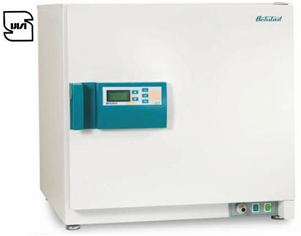
One of the other widely used devices in geotechnical and strength of materials laboratories is the Oven, which is used for drying soil, concrete, asphalt, cement, and other samples in the laboratory.
Unlike hot plates, ovens have a closed chamber made of stainless steel (in high-quality models) for transferring heat to the sample. The laboratory sample is placed inside the chamber and its temperature is raised.
For this purpose, the preparation of an appropriate oven with the desired capacity and according to the volume of work is up to the buyer’s choice.
Balance (Scale)
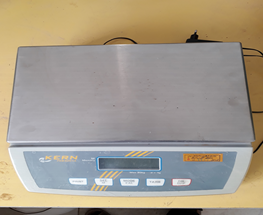
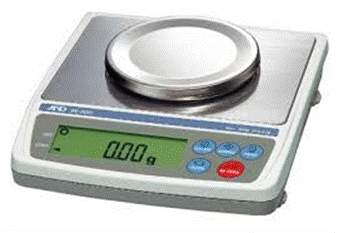
| Device Name |
Capacity |
Model / Year |
Manufacturer / Country |
Standard |
Condition / Quantity |
| Balance with 1 g Accuracy |
30 kg |
FKB30K1A‑2008 |
KERN – Germany |
— |
Operational – 1 unit |
| Balance with 0.1 g Accuracy |
6 kg |
EK‑6100i‑2014 |
AND – Japan |
— |
Operational – 1 unit |
In all standards of performing tests, the issue of weighing is mentioned. This means that the weight of the test specimen must be measured before conducting the test and sometimes after performing it.
For this purpose, Soil Mechanics Industries Co. of Iran has provided various models of mechanical and digital balances with the best quality and from the top manufacturers to complete its product range.
Sieves
| Device Name |
Diameter / Capacity |
Model / Year |
Manufacturer / Country |
Standard |
Condition / Quantity |
| Grain‑Size Sieve |
12‑inch Diameter |
— |
Damavand – Iran |
ASTM D422 / C136 |
Operational – 14 units |
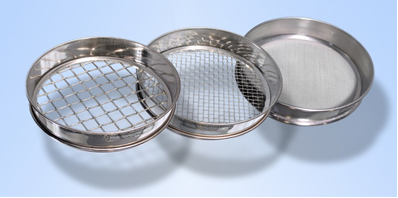
It is common to use the sieve test to obtain the size distribution of sand and gravel particles. The procedure of this test is described in ASTM C 136. For this purpose, a set of sieves whose bottoms have holes of precise and specific sizes, and whose mesh at the bottom is made by wire, is used. In this way, the set of sieves is placed one on top of another — the sieve with larger holes on the top and the finer sieves below. Then the dry soil, whose all clods are broken and only soil grains are present in it, is poured onto the top sieve, and the sieve is shaken for a certain (standard) period so that the soil grains pass through it. It is clear that the grains smaller than the holes of the sieves pass through, and the larger grains remain on the wires of the sieve.
• Note: This method is reasonable for the coarser particles of soil, but it is not suitable for particles smaller than a certain limit, because very fine soil particles stick together, and as a result, the sieve method will no longer give proper results. If the amount of fine soil particles is high, we may have to first pass water over the soil and its coarse grains, and after washing the larger particles and disintegrating the clods, start sieving.
Melting and Freezing Point Apparatus
| Device Name |
Capacity (°C) |
Model and Year of Manufacture |
Company and Country of Manufacture |
Test Standard |
Device Status – Quantity |
| Melting and Freezing Point Apparatus |
−20 to +60 |
AC 520 |
Tecnotest – Italy |
ASTM C1262 – C672 – C666 |
Operational – 1 |
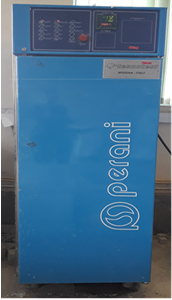
Function:
For determining the resistance of concrete against freezing and thawing according to the standard, it is used inside the laboratory by the following two methods:
First method: Freezing and thawing process in water
Second method: Freezing process in air and thawing in water
Technical Specifications:
Temperature range: Controlled temperature from −20 °C to +60 °C with an accuracy of ±1 °C
Body: External body made of oil‑sheet metal with electrostatic paint coating
Equipped with thermostat, thermometer, and automatic digital timer
Concrete Curing
| Device Name |
Capacity |
Model and Year of Manufacture |
Company and Country of Manufacture |
Test Standard |
Device Status – Quantity |
| Concrete Curing Apparatus |
450 litres |
2008‑AT‑239 |
Tecnotest – Italy |
– |
Operational – 1 |
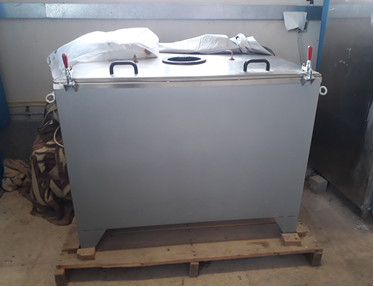
Curing is a process that is carried out to preserve the moisture and temperature of concrete for a specified period of time immediately after placing and finishing the concrete. Curing has a significant effect on the properties of hardened concrete such as compressive strength, durability, abrasion resistance, and resistance to freezing. Curing is essential for cast concrete in three forms: protection, care (curing), and nurturing (heat curing). The best moisture curing is flooding the concrete that has completed its setting. Continuous direct moistening and then indirect moistening by absorbent layers and prevention of evaporation, and finally, the method of evaporation prevention (alone) are used. In this method, nylon or curing compounds are used. Increasing the duration of moisture curing leads to improvement in the strength quality and durability of the concrete curbstones.
Pull‑Out Test Apparatus
| Device Name |
Capacity |
Model and Year of Manufacture |
Company and Country of Manufacturer |
Test Standard |
Device Status – Quantity |
| PULL‑OUT |
60 kN |
LOk‑TEST‑AT341‑2009 |
Tecnotest – Italy |
ASTM C900 |
Operational – 1 |
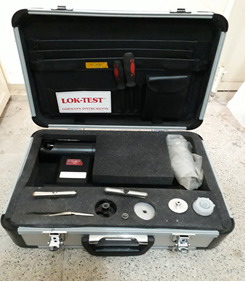
This apparatus is used to determine the force required to pull out the metal piece that has previously been embedded in the hardened concrete. Pulling out the metal piece is usually carried out by two types of tests (Lok‑test and Capo‑test), and the results of both are similar. This test makes it possible to obtain an accurate evaluation of the concrete strength at the desired location.
Ultrasonic Apparatus
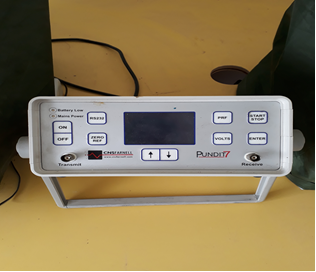
| Device Name |
Capacity |
Model and Year of Manufacture |
Company and Country of Manufacturer |
Test Standard |
Device Status – Quantity |
| PUNDIT |
0.1 – 999.9 S |
AT‑274‑2008 |
Tecnotest – Italy |
ASTM C597 |
Operational – 1 |
Ultrasonic testing of concrete is one of the non‑destructive tests of concrete. These tests, by providing various data of existing structures, enable experts and specialists to make judgments and decisions regarding the performance, needs, and methods of repair and rehabilitation of concrete structures. Ultrasonic testing of concrete, by providing the relative compressive strength and the length and dimensions of cracks created in concrete, enables designers and experts to make decisions regarding strengthening and retrofit designs or verification of the operations performed. This test is currently mainly based on the measurement of pulse velocity using ultrasonic techniques. This method is widely accepted throughout the world and is a suitable lightweight and powerful instrument that can easily be used both on site and in the laboratory. If an experienced operator uses this method correctly, a considerable amount of information about the inside of a concrete member can be obtained. However, since the range of pulse velocities related to the actual quality of concrete is relatively small (3.5 – 4.8 kilometers per second), the application of this method, especially on site, requires great accuracy. In addition, since the elastic properties of concrete, which affect the pulse velocity, are important, a thorough study of the relationship between the modulus of elasticity and strength is often necessary when interpreting the results. The use of this method is recommended in BS 1881: Part 203 and also in ASTM C597. The performance of this test is based on the concept that an impact on a solid mass produces three types of waves. Surface waves with elliptical particle displacement are the slowest waves, while shear and transverse waves with particle displacement at right angles to the direction of motion are faster. Longitudinal waves, which have particle displacement in the direction of motion (sometimes called compressional waves), are the most important waves because they are the fastest and generally provide more useful information. Electro‑acoustic transducers essentially generate this type of wave; other types generally do not cause significant interference due to their lower speed. The pulse velocity depends on the elastic properties and the volume of the medium; therefore, if the volume and wave propagation velocity are known, the elastic properties can be evaluated.
Cover Meter Apparatus
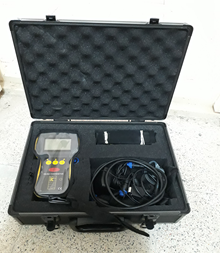
| Device Name |
Capacity |
Model and Year of Manufacture |
Company and Country of Manufacturer |
Test Standard |
Device Status – Quantity |
| MICRO_COVERMETER |
5 mm – 185 mm |
AT 278/1 |
Tecnotest – Italy |
BS 1881:204 |
Operational – 1 |
Concrete rebar detector and cover meter are used for scanning the reinforcement mesh in concrete.
The scan can contain information such as:
1- Diameter of rebar
2- Location and cover of rebars embedded in concrete.
The concrete rebar scanning device has various types which, according to their power, can display rebars at different depths.
Concrete Chloride Content Tester
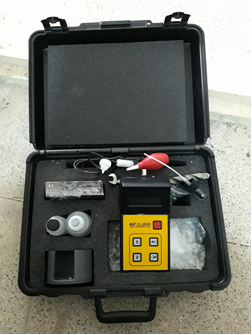
| Device Name |
Capacity |
Model and Year of Manufacture |
Company and Country of Manufacturer |
Test Standard |
Device Status – Quantity |
| Concrete Chloride Content Tester |
0.002% – 2% |
AT‑338/B‑2009 |
JAMES – USA |
ASTM C1202 |
Operational – 1 |
One of the common methods for rapid evaluation of concrete permeability against chloride ion is the RCPT method. This method is based on the ASTM C1202 or AASHTO T277 standard and is currently considered as one of the concrete quality control methods in the country’s technical documents. One of the important reasons for the widespread use of the RCPT method is the short time required to perform this test. In this test, the total amount of current passing through a saturated concrete sample under a voltage of 60 volts over a period of 6 hours is measured. To ensure the saturation of all samples according to the standard, they are placed in a vacuum chamber of 1 mmHg.
Accelerometer
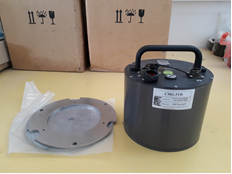
| Device Name |
Capacity |
Model and Year of Manufacture |
Company and Country of Manufacturer |
Test Standard |
Device Status – Quantity |
| CMG‑5TD |
- |
CMG‑5TD |
GUALP – UK |
- |
Operational – 5 |
The CMG-5TD is a true three-axis electromechanical accelerometer designed for broadband seismic monitoring and applications requiring highly sensitive and robust sensors with minimal maintenance, as well as a simple method for intermittent tests.
Employing the suspended mass system and moving coil improves the signal-to-noise ratio. The magnetic system and capacitive position sensors offer equivalent controls for precise electronic centering of the mass. In the rest state, the accelerometer mechanism is in equilibrium and does not produce any electrical output.