Department Soil Science and Engineering
Soil Science and Engineering is a fundamental academic discipline dedicated to the study of soil as a vital natural resource. It encompasses the physical, chemical, biological, and mineralogical properties of soil, as well as their interactions with water, air, plants, and the environment. As the foundation for food and medicine production, soil plays an irreplaceable role in sustaining life and supporting ecosystems. This field applies scientific principles to understand soil formation, classification, fertility, conservation, and management, addressing critical challenges such as land degradation, erosion, salinity, contamination, and sustainable agricultural production. Professionals in soil science and engineering are essential for preserving soil health, optimizing land use, and ensuring food security for present and future generations.
Academic Evolution and Historical Context
The Department of Soil Science and Engineering at the University of Mohaghegh Ardabili stands as one of the important and influential academic units within the Faculty of Agriculture, dedicated to training specialists who contribute to the preservation and sustainable management of soil resources. Since its establishment, the department has played a significant role in supplying skilled experts to the scientific and executive sectors of Ardabil province and the country at large.
The department's academic journey began in 2000 (1379 Iranian calendar) with the admission of undergraduate students in the Bachelor of Science program in Soil Science and Engineering. Building on this foundation, graduate education was inaugurated in 2007 (1386) with the launch of a Master of Science program in Soil Science. A significant milestone in specialization occurred in 2019 (1398) with the establishment of two distinct master's fields: Soil Resource Management and Soil Fertility Management and Biotechnology. Most recently, the department achieved doctoral status with the approval of the Ph.D. program in Soil Resource Management—Soil Physics and Conservation in 2023 (1402) , which commenced student admissions in the first semester of the 2024-2025 academic year with an inaugural cohort of three doctoral candidates.
Research Focus Areas and Scientific Contributions
The department maintains a robust and applied research agenda addressing critical challenges in soil science and management:
1. Soil Physics and Conservation:
Investigating soil physical properties, water movement in soils, soil-plant-water relationships, erosion processes, and conservation practices to prevent soil degradation and maintain soil health.
2. Soil Chemistry and Fertility:
Researching nutrient dynamics, fertilizer management, soil chemical properties, and plant nutrition to optimize agricultural productivity while minimizing environmental impacts.
3. Soil Biology and Biotechnology:
Studying soil microorganisms, microbial interactions, biological processes, and biotechnological applications for enhancing soil fertility, bioremediation, and sustainable agriculture.
4. Soil Genesis, Classification, and Mapping:
Investigating soil formation processes, developing soil classification systems, and creating digital soil maps using advanced technologies including remote sensing and geographic information systems.
5. Environmental Soil Science:
Addressing soil contamination, remediation strategies, and the role of soils in environmental quality and ecosystem services.
6. Land Evaluation and Management:
Developing methodologies for assessing land capability and suitability for various agricultural and non-agricultural uses.
Active Academic Programs and Degree Offerings
The Department of Soil Science and Engineering currently offers a comprehensive range of programs across three degree levels:
1. Undergraduate Program (B.Sc.):
- Bachelor of Science in Soil Science and Engineering
This four-year program provides students with comprehensive knowledge of fundamental soil science disciplines, including soil physics, soil chemistry, soil biology and microbiology, soil fertility and plant nutrition, irrigation and drainage, soil erosion and conservation, soil mineralogy, environmental soil science and contamination, and soil classification and mapping. Graduates acquire practical skills essential for entering the job market, including:
- Measurement of macro and micronutrients (nitrogen, phosphorus, potassium, calcium, magnesium, sulfur, iron, etc.) in soil, water, and plant tissues
- Assessment of soil texture, salinity, pH, organic matter, equivalent calcium carbonate, gypsum content, cation exchange capacity (CEC), bulk density, particle density, and available water capacity
- Determination of protein content, microbial populations, basal and induced microbial respiration, soil biomass carbon and nitrogen
- Preparation of general and specific culture media and related microbiological techniques
- Synthesis of nanoparticles and measurement of soil aggregate stability
- Moisture measurements using pressure plate apparatus and hydraulic conductivity determination
- Proficiency with GPS devices, planimeters, stereoscopes, and software including GIS, Map Source, and Global Mapper
2. Graduate Programs (M.Sc.):
The department offers two distinct master's fields, each with two specializations:
- Master of Science in Soil Resource Management
- Specialization: Soil Management and Land Evaluation
- Specialization: Soil Physics and Conservation
This program provides advanced training in soil mapping, soil classification, digital soil mapping, remote sensing, soil physics, soil-water-plant relationships, and advanced soil and water conservation methods. Graduates are empowered to understand and manage soils effectively, prevent soil degradation and erosion, and protect soil as a non-renewable resource.
- Master of Science in Soil Fertility Management and Soil Biotechnology
- Specialization: Soil Chemistry, Fertility, and Plant Nutrition
- Specialization: Soil Biology and Biotechnology
This program focuses on combating environmental stresses through chemical and biological mechanisms in soil, optimizing the use of organic and chemical fertilizers, understanding biological interactions in soil, and addressing soil fertility challenges. Students acquire updated knowledge that they apply in their research endeavors.
3. Doctoral Program (Ph.D.):
- Doctor of Philosophy in Soil Resource Management—Soil Physics and Conservation
The doctoral program represents the highest level of academic training in soil science, preparing specialists with advanced expertise for leadership roles in research, education, and executive sectors. The program admitted its first cohort of three students in the first semester of the 2024-2025 academic year. The presence of soil science-related organizations and companies in Ardabil province creates significant demand for experts with the highest academic qualifications. This program provides opportunities for qualified individuals, including those who may have been away from doctoral studies for extended periods, to return to academia and complete advanced degrees.
Departmental Infrastructure and Laboratories
The Department of Soil Science and Engineering is equipped with three advanced laboratories and supporting facilities that enable high-quality education and cutting-edge research:
- Soil Chemistry and Fertility Laboratory:
Equipped with atomic absorption spectrometer, flame photometer, Kjeldahl apparatus, spectrophotometer, nitrate meter, Buchner funnel extractor, pH meters, EC meters, and multiple high-precision scales for comprehensive chemical analysis of soils, water, and plants.
- Soil Biology and Biotechnology Laboratory:
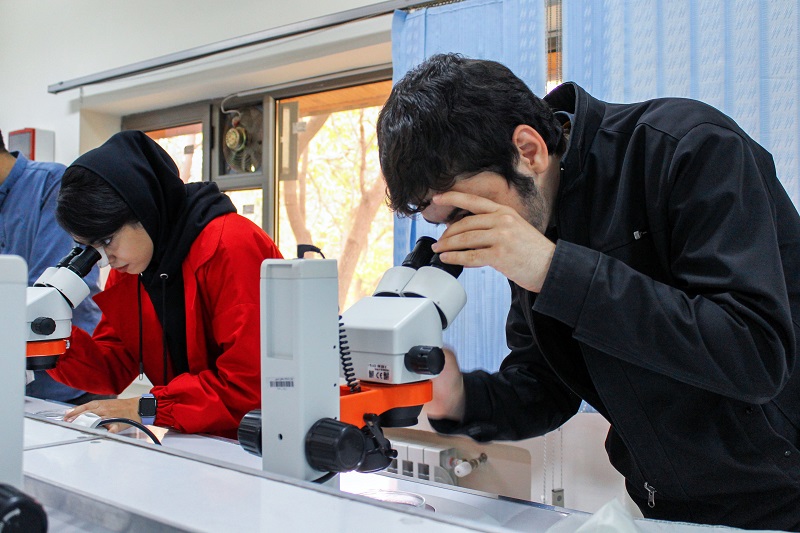
Featuring laminar hood, autoclave, incubator, shaker incubator, -80°C freezer, centrifuge, microcentrifuge, optical microscope, stereoscope, and equipment for microbial culture, enumeration, and activity measurements including basal and induced respiration and biomass carbon and nitrogen determination.
- Soil Physics Laboratory:
Equipped with pressure plate apparatus, saturated hydraulic conductivity device, hanging water column, soil penetrometer, suction infiltration meter, rainfall simulator, shear vane, and wet and dry sieve shakers for characterizing soil physical properties and water dynamics.
- Additional Facilities:
Growth chamber for controlled-environment studies, polarizing microscope for mineralogical analysis, soil sample preparation room (dry lab), and advanced GPS devices for field investigations.
- Software and Analytical Capabilities:
The department provides access to specialized software including GIS, Map Source, and Global Mapper, along with instruments such as planimeters and stereoscopes for spatial analysis and mapping.