
Educational Laboratory Series: Physics 1, Thermodynamics, Fluid Mechanics and Heat Transfer
Educational Laboratory Series: Physics 1, Thermodynamics, Fluid Mechanics and Heat Transfer
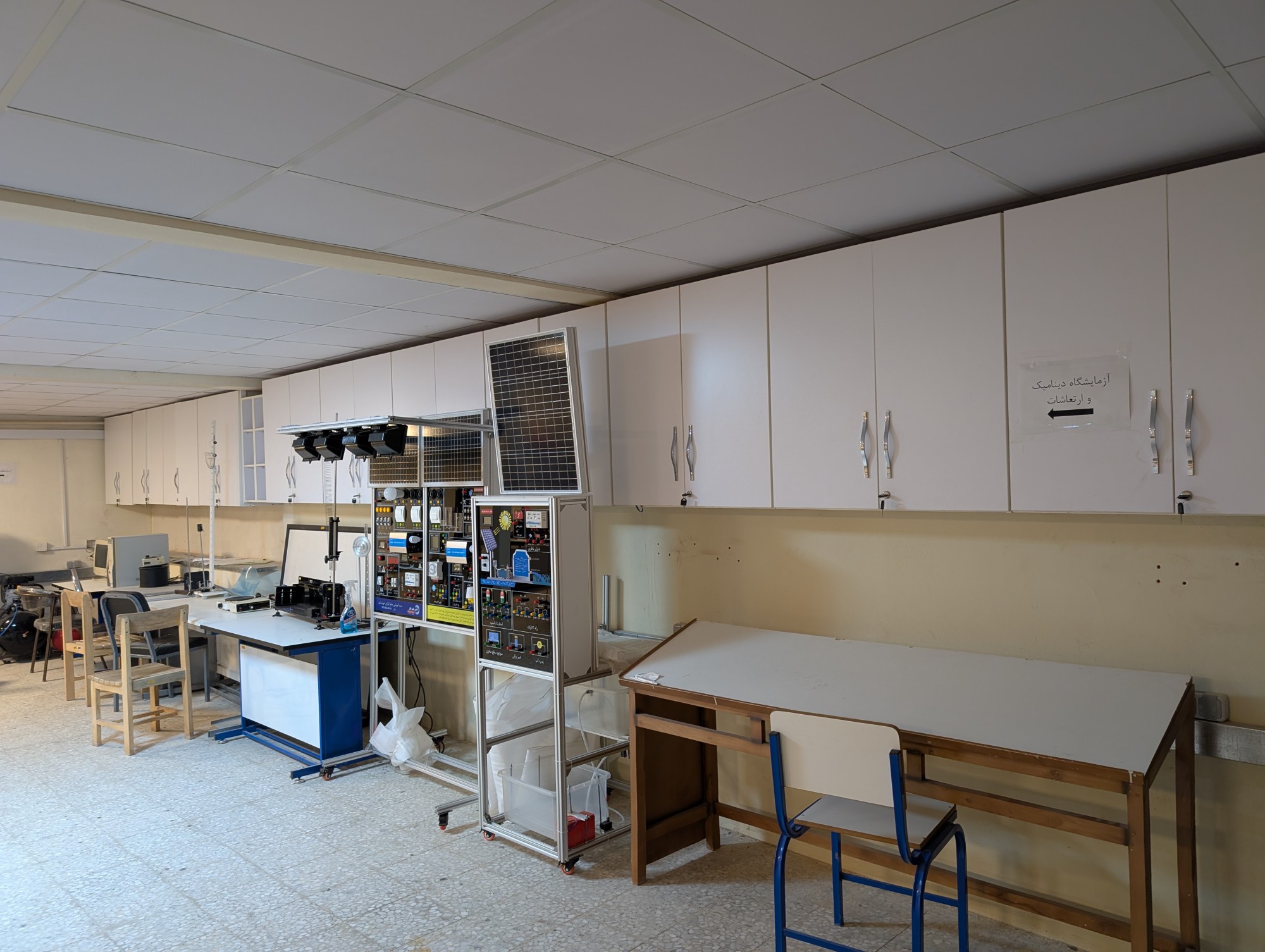
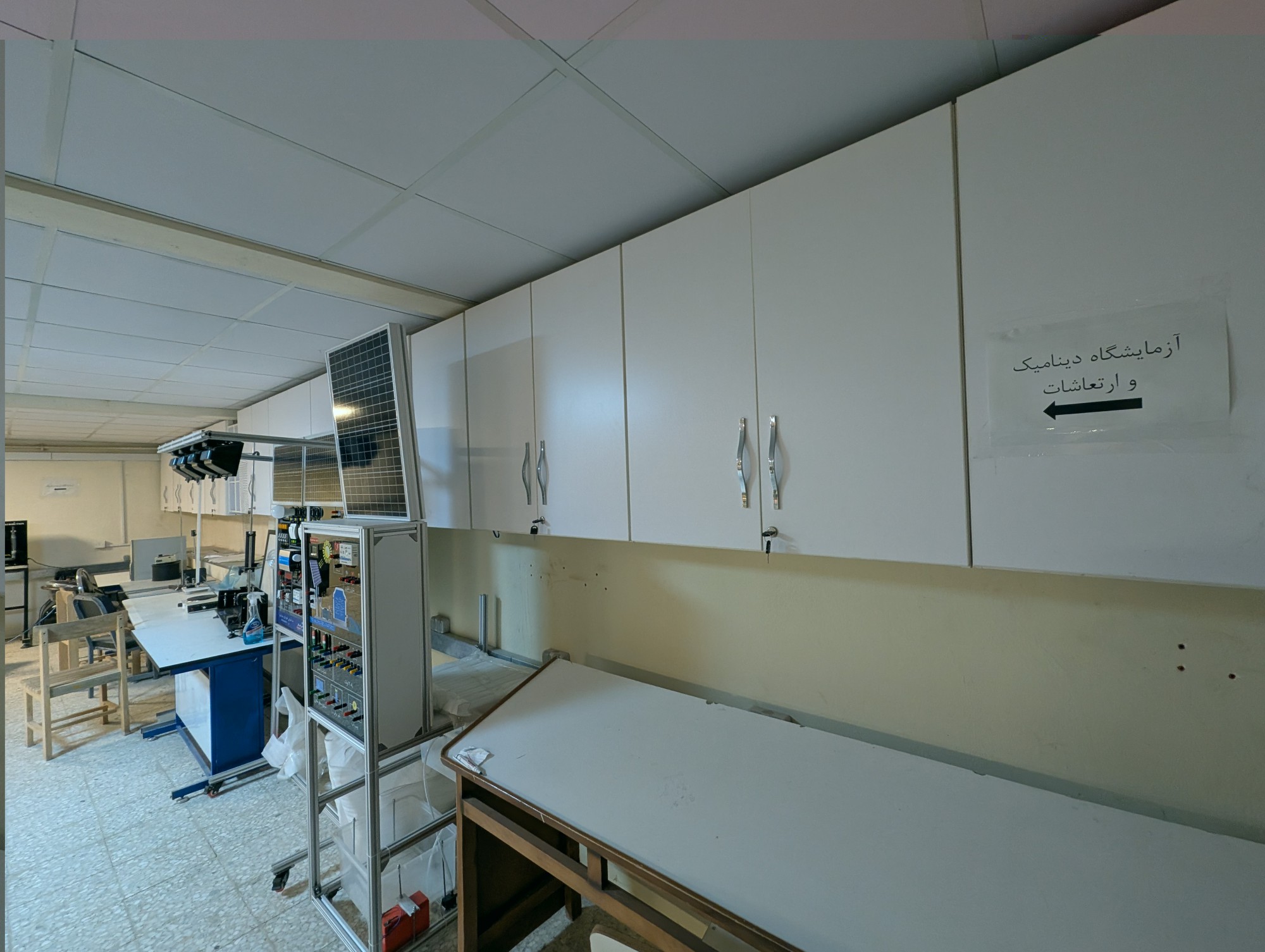
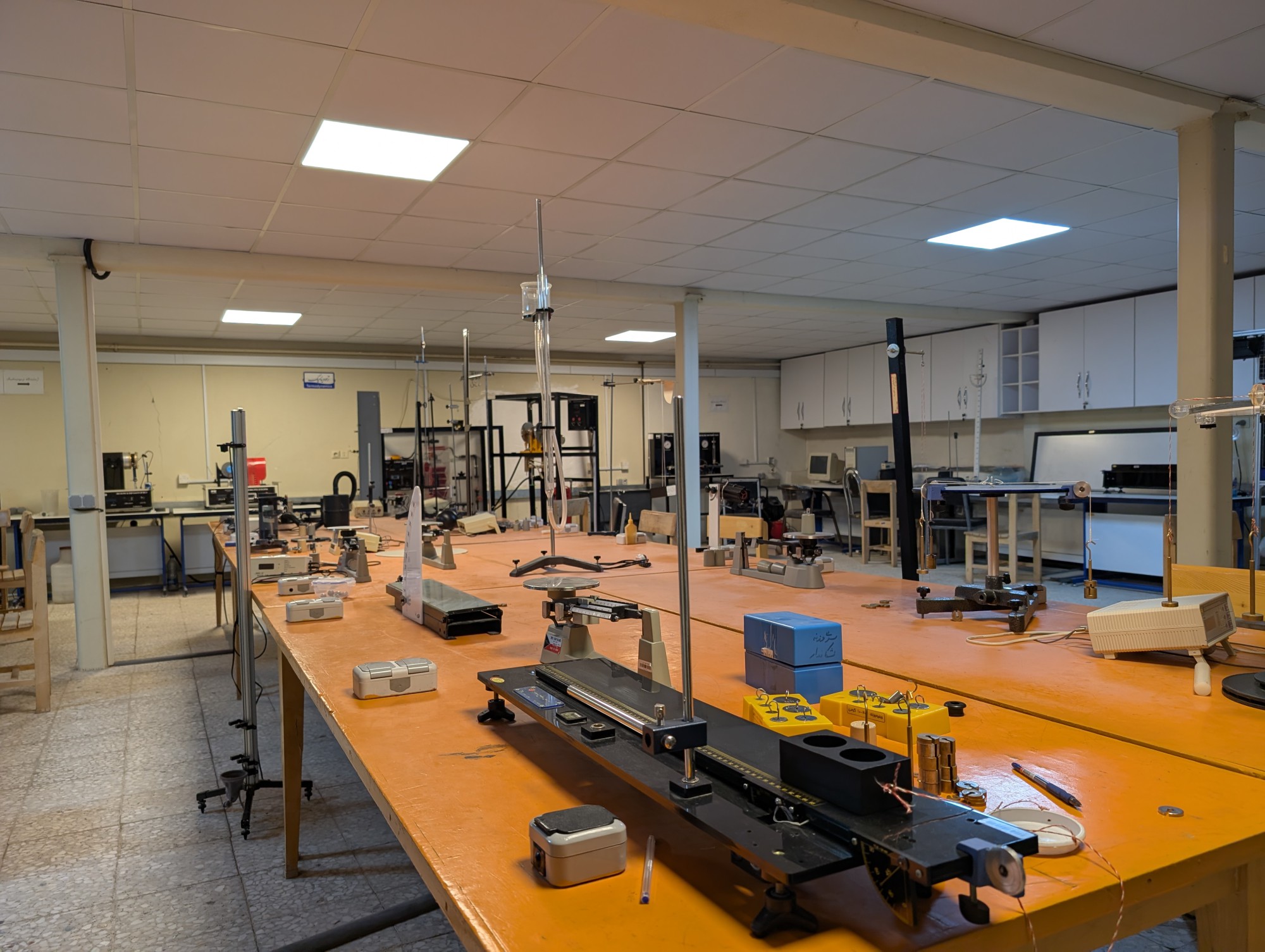
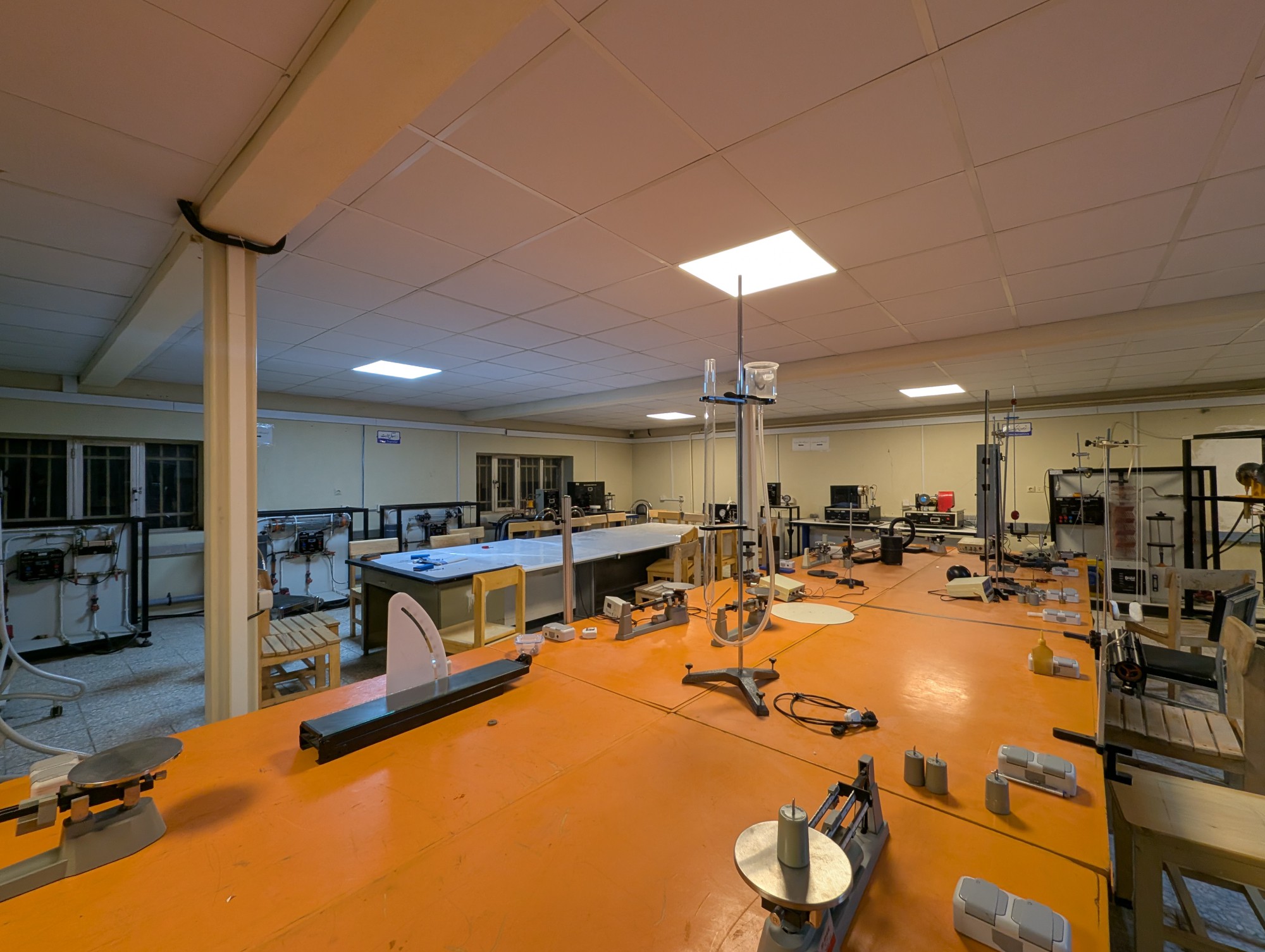
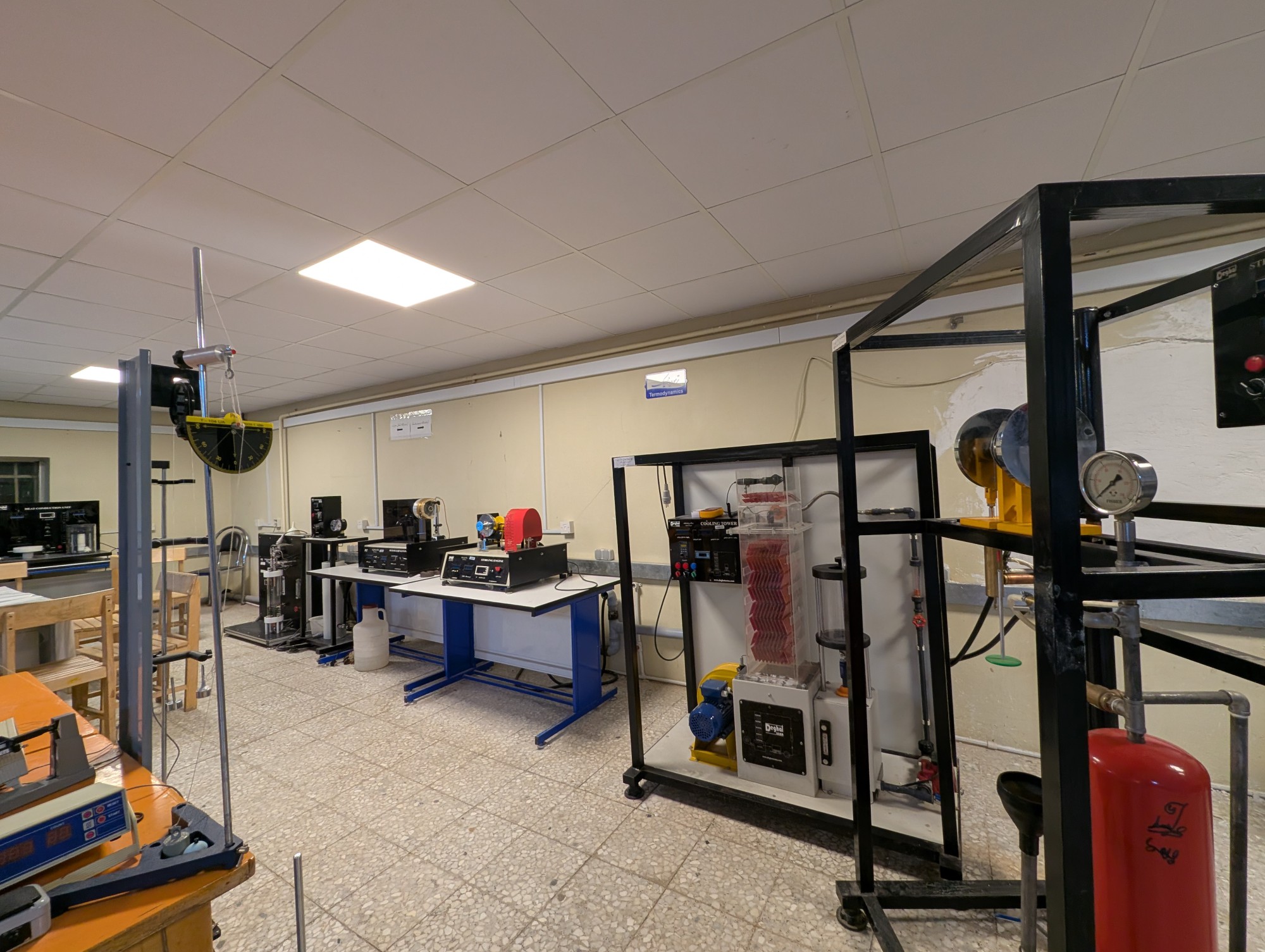
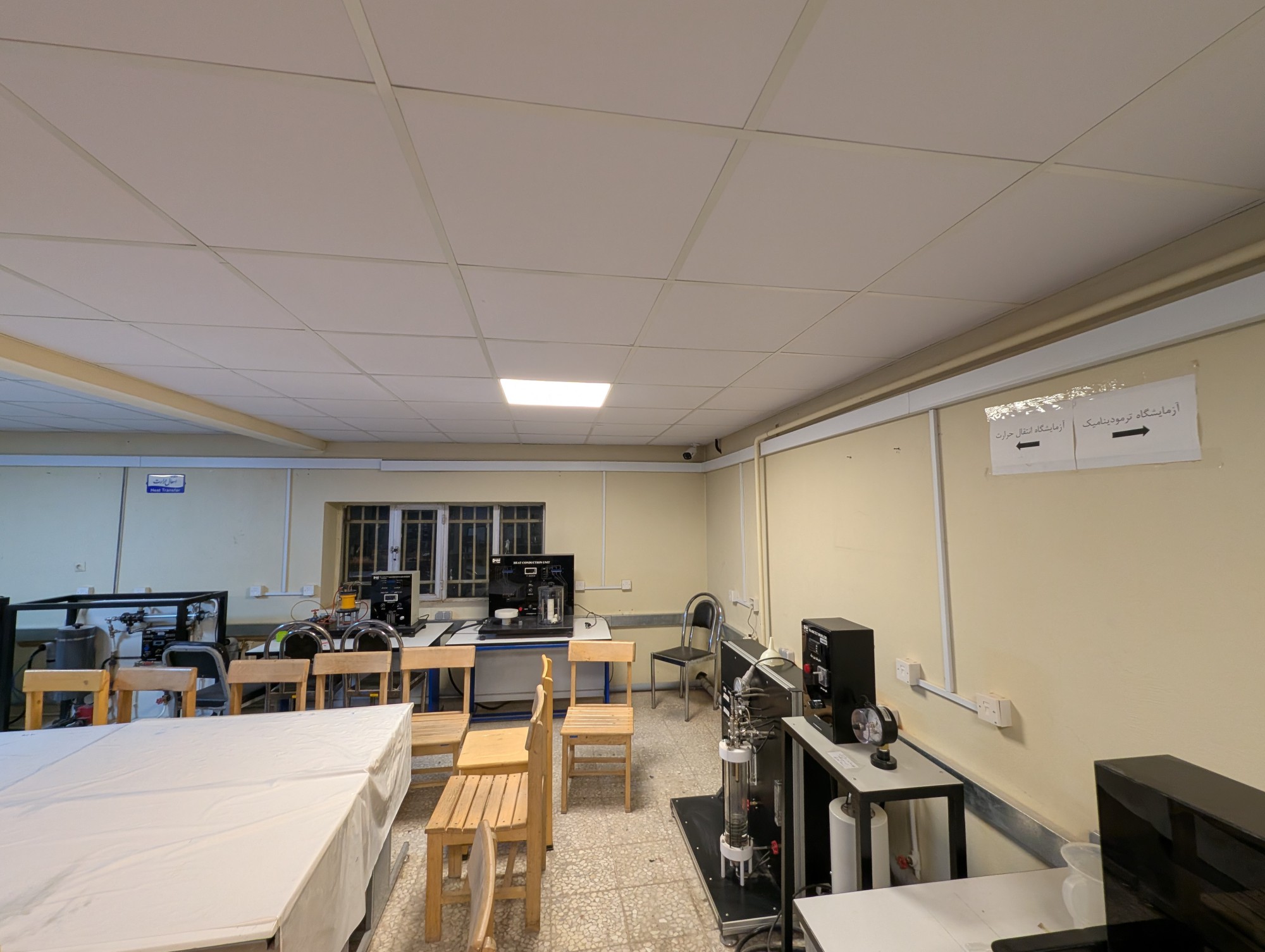
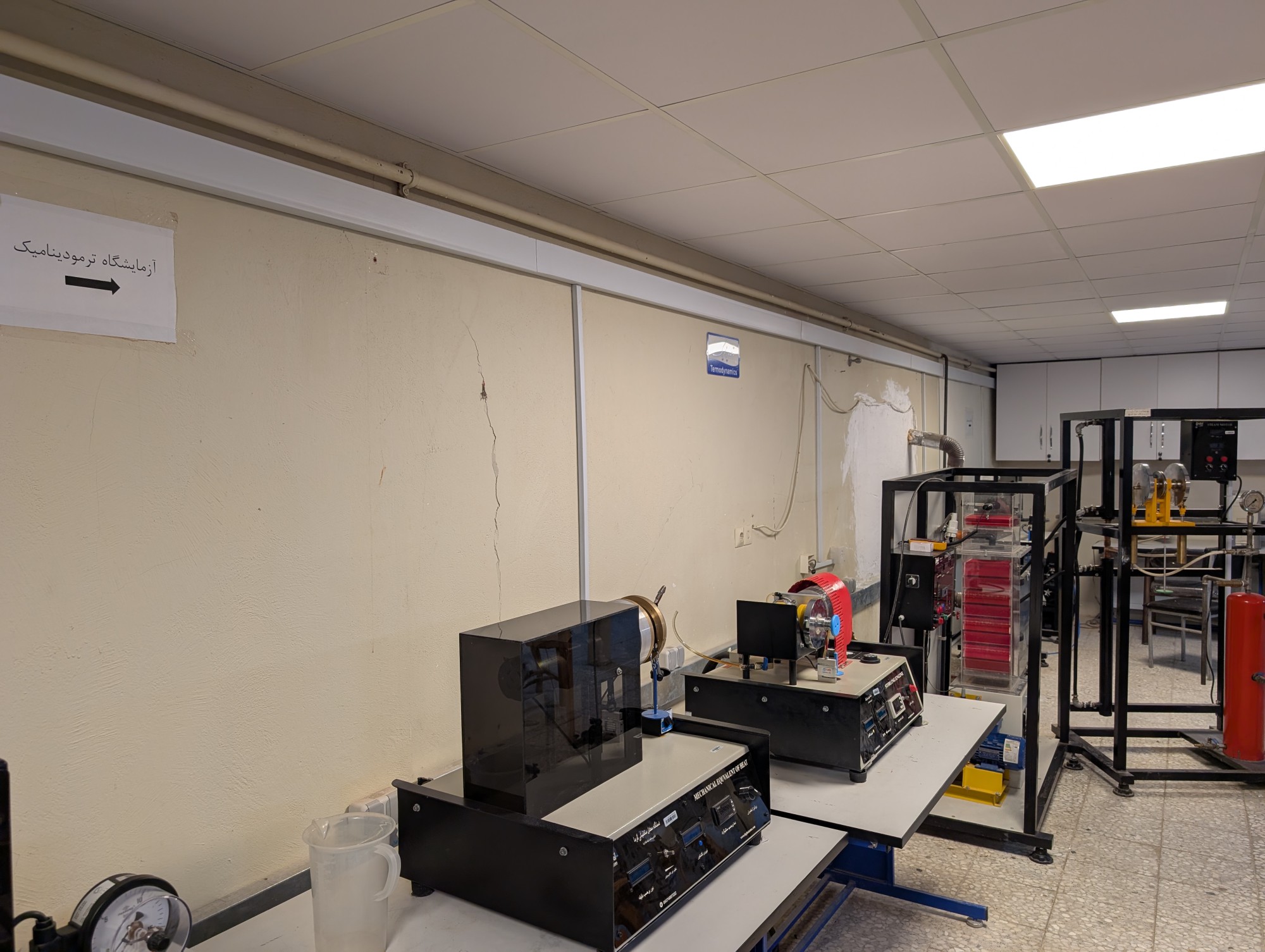
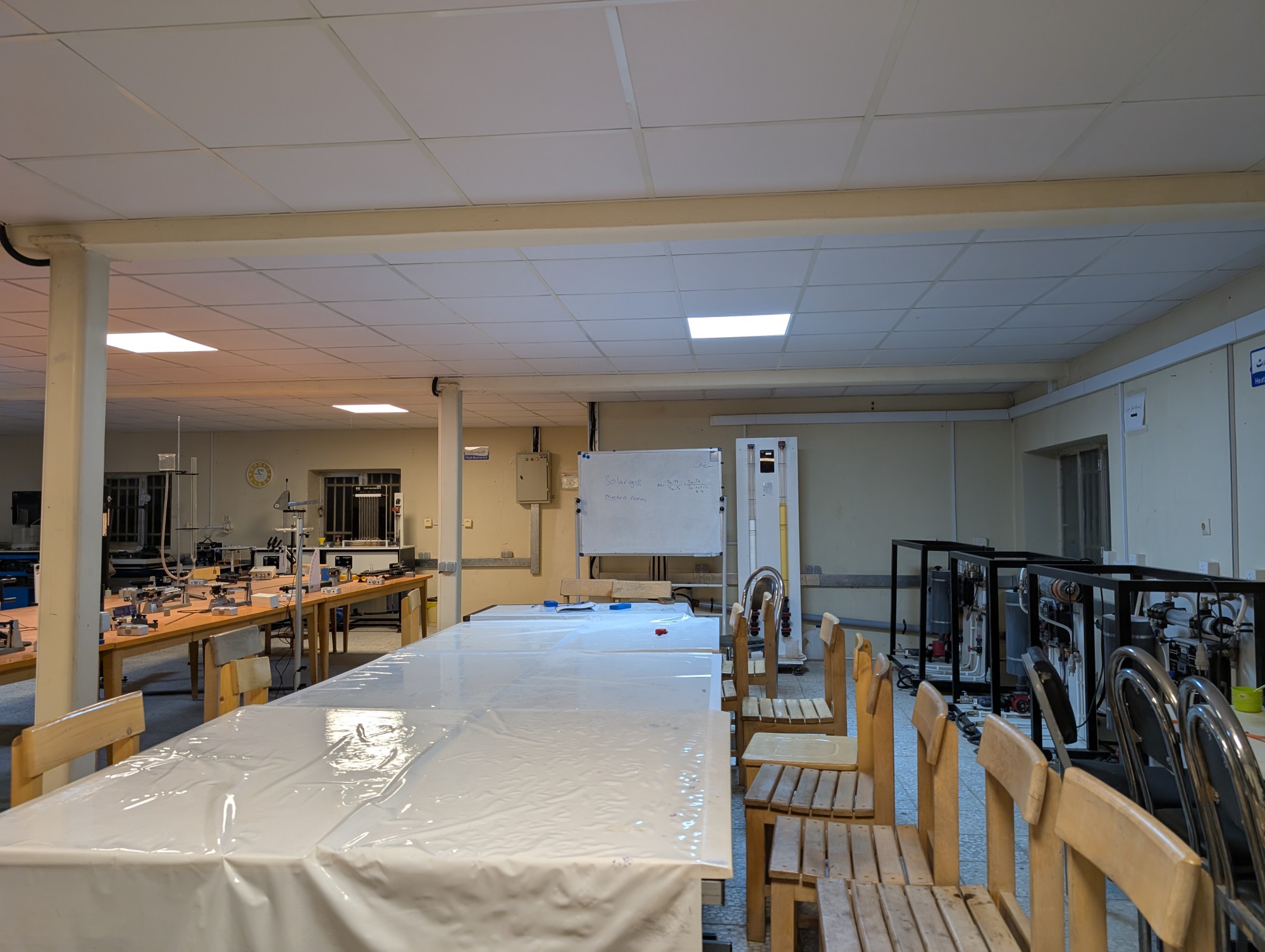
General Physics Laboratory I
This laboratory focuses on the study of classical and fundamental concepts of motion and the laws governing them. It is equipped with the necessary instruments for measurement and for conducting ten independent experiments related to various types of motion, including linear motion, projectile motion, and rotational motion. In addition, the relationships associated with simple harmonic oscillations, the determination of local gravitational acceleration, force analysis, and different types of collisions are examined and experimentally investigated.
In the following, several of the available experimental setups are presented.
Thermodynamics Laboratory
Marcet Boiler

*Device Name: Marcet Boiler
*Device components:
Stainless steel water tank with a protective layer.
Electric heating element (2 kW) for converting water into vapor.
Pressure sensor to measure pressure of saturated water vapor inside the tank.
Temperature sensor to measure temperature of saturated water vapor inside the tank.
Safety valve on the tank for preventing excessive vapor pressure inside the tank.
*Experiments:
Investigating the relationship between pressure and temperature of saturated water vapor (P-T curves).
Validation of device accuracy using the Clausius-Clapeyron equation:
(dP/dT)SAT =hfg/T.vg
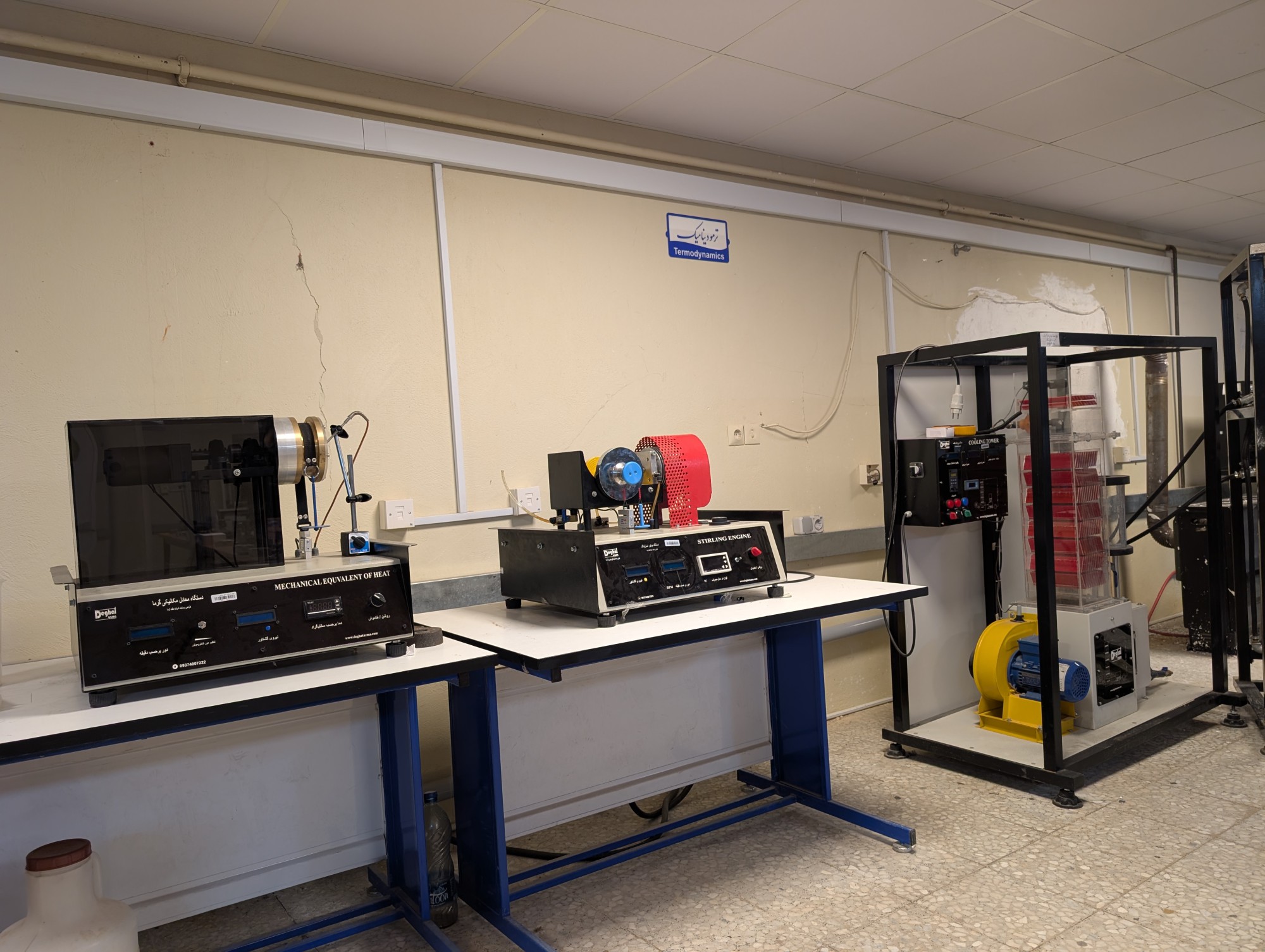
Mechanical Equivalent of Heat

*Device Name: Mechanical Equivalent of Heat
*Device components:
Geared electric motor with adequate power.
Motor speed control system (via knop).
Motor speed sensor and its digital display in RPM.
Force measurement sensor (load cell) and its digital display in Kgf.
PT100 type temperature sensor and its digital display in ̊C.
Specific brass chamber with defined dimensions (calorimeter).
Static friction application system for the chamber surface.
*Experiments:
Investigating the relationship between mechanical energy and thermal energy.
Stirling Engine

*Device Name: Stirling Engine
*Device components:
Cylinder and piston for the hot section, cylinder and piston for the cold section.
Regenerator system.
500W adjustable heater for the hot section (with power display).
Motor speed sensor (RPM sensor) and its display in RPM.
Brake torque force display
Cold-section cooling via Water circulation (inlet/outlet ports).
*Experiments:
Study of Stirling engine operating principles.
Measurement and analysis of the Stirling engine efficiency.
Cooling Tower

*Device Name: Cooling Tower
*Device components:
Water tank equipped with heater to supply hot water to the tower.
Water pump with specific flow rate and power for circulation.
Flowmeter to adjust the flow rate of hot water entering the tower.
Spray nozzle for distributing water over the packing.
Digital sensors and displays for dry-bulb temperature and relative humidity.
Electric fan for creating air flow in the tower.
Packing with specified pitch.
Moisture eliminator.
*Experiments:
Effect of cooling load on the wet-bulb approach temperature and tower efficiency
Relationship between air velocity and wet-bulb approach temperature.
Relationship between cooling load and cooling range.
Investigating the rate of water evaporation under different device settings.
Steam Engine

*Device Name: Steam Engine
*Device components:
Dual-cylinder setup with pistons, crankshaft, and flywheel.
Boiler (water tank equipped with heater) for supplying the steam.
Pressure gauge for recording steam pressure inside the boiler.
RPM sensor and its display.
Torque measurement system and its display.
Safety valve on the boiler.
*Experiments:
Investigating of brake torque in the steam engine.
Calculation of Power produced by the piston in the steam engine.
Efficiency calculation of the steam engine.
Nozzle Test

*Device Name: Nozzle Test
*Device components:
A compressor to supply air pressure and flow for the nozzle test.
Eight pressure gauges for measuring pressure at various sections of the nozzle.
Two large pressure gauges for measuring upstream and downstream flow pressures.
Two gate valves at the nozzle inlet-outlet for adjusting input and output pressures.
Flowmeter for measuring air flow rate.
Temperature sensors, quick shut-off valve, valve for adjusting air flow rate through the nozzle, and an input pressure regulator.
Special couplings for quick replacement of nozzles without tools.
Digital display for pressure, temperature, and air flow rate.
*Experiments:
Choking phenomenon in a convergent nozzle.
Pressure distribution in a convergent nozzle.
Effecting the outlet pressure on location of shock wave formation in a divergent nozzle.
Effecting the outlet pressure on the mass flow rate in a convergent nozzle.
